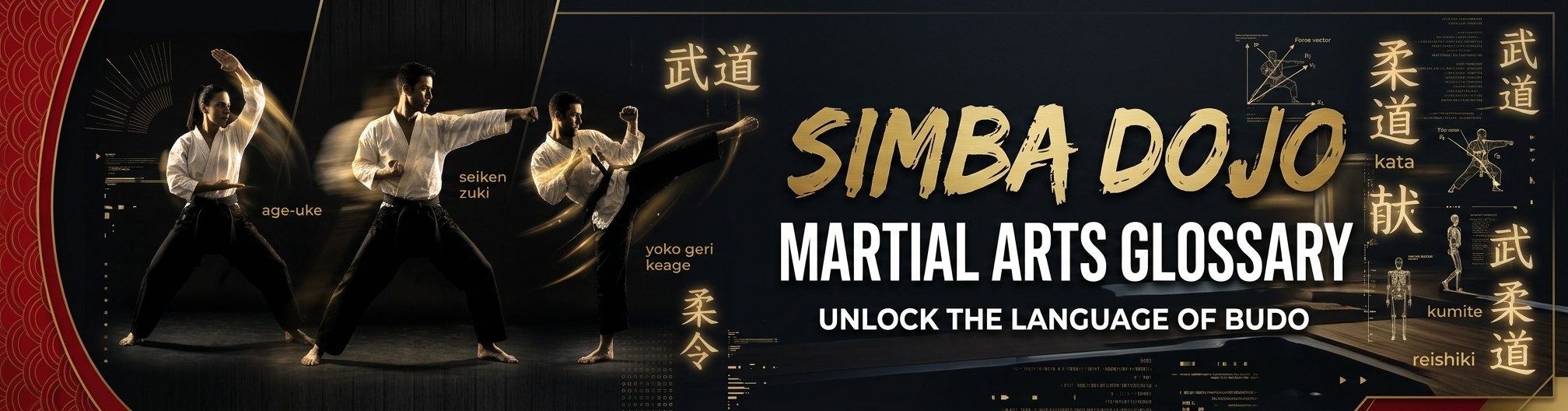
| Ashi-Waza |
Ashi-Waza (足技)
Ashi-Waza is a major technical classification in Shotokan Karate and traditional Japanese Budo translating to "foot and leg techniques." Encompassing all offensive, defensive, and footwork-based applications performed with the feet and legs, Ashi-Waza includes kicks (Geri-waza), foot sweeps (Ashi-barai), leg hooks (Ashi-kake / Ashi-hikkake), stance shifts (Unsoku / Tai Sabaki), and balance-disrupting takedowns (Kuzushi-waza).
Etymology & Structural Breakdown
The compound term Ashi-Waza consists of two fundamental Japanese kanji characters:
-
Ashi (足): Meaning "foot," "leg," "step," or "stride."
-
Waza (技): Meaning "technique," "skill," "art," or "method."
Combined, Ashi-Waza (足技) translates literally to "foot/leg techniques," designating the entire curriculum of footwork, kicking, sweeping, and leg-based controls within Japanese martial arts.
Key Characteristics & Components
-
Distance Management & Mobility (Maai & Unsoku): Forms the dynamic base of all footwork, allowing a martial artist to adjust distance, close gaps explosively, or evade attacks via lateral body shifting (Tai Sabaki).
-
Balance Disruption (Kuzushi): Utilizes sweeps and hooks to compromise an opponent's root and stance alignment, destabilizing their center of gravity (Tanden).
-
Dual-Function Arsenal: Integrates long-range kinetic strikes (kicks) with close-quarters entanglement, trapping, and takedown mechanics.
-
Chambering & Recoil (Hiki-ashi): Demands precise knee chambering, ankle locking, and immediate leg recoil to maintain single-leg stability and prevent leg grabs.
Practical and Tactical Application in Shotokan Karate
In Shotokan Karate, Ashi-Waza serves as both foundation and tactical multiplier across basic line drills (Kihon), sparring (Kumite), kata, and practical self-defense (Goshin-jutsu):
-
Kicking Offense & Interception (Geri-waza & De-ai): Delivers devastating long-range strikes—such as Mae-geri (front kick), Yoko-geri (side kick), Mawashi-geri (roundhouse kick), and Ushiro-geri (back kick)—to counter advancing opponents or break through guards.
-
Foot Sweeps in Kumite (Ashi-barai): Used in sparring to sweep an opponent's leading or weighted foot, instantly breaking their guard and bringing them down for a decisive finishing punch (Gyaku-zuki).
-
Kata Integration & Bunkai: Featured across Shotokan forms—such as Heian Godan, Kanku Dai, Bassai Dai, and Gankaku—where leg trapping, stamping, and sweeping movements execute close-quarters joint manipulations (Torite) and takedowns.
Key Variations & Mechanics
-
Geri-waza (蹴技): Kicking methods, categorized into snapping (Keage) and thrusting (Kekomi) trajectories.
-
Ashi-barai (足払い): Foot sweeping techniques designed to brush away a moving or weighted foot.
-
Ashi-kake / Ashi-hikkake (足掛け / 足引っ掛け): Leg hooking and trapping techniques used to latch around an opponent's leg for takedowns.
-
Fumi-waza (踏技): Stamping techniques, such as Fumikomi (stamping kick), targeted at an opponent's foot, knee joint, or instep.
-
Unsoku-hō (運足法): Principles of foot maneuvering, including sliding step (Suri-ashi), stepping forward (Ayumi-ashi), and shifting (Tsugi-ashi).
Budo & Cultural Significance
In Budo, Ashi-Waza embodies the connection between the earth and body root (Tanden). While hand techniques (Te-waza) often deliver direct blows, leg techniques govern spatial command, equilibrium, and tactical mobility. Mastering Ashi-Waza teaches the karateka Ju yoku go o seisu (softness overcomes hardness), demonstrating that manipulating an opponent's footing can defeat raw strength without clashing head-on. It reinforces that a martial artist's power originates from grounded, disciplined legs.
Author - Sensei Miller
Hits - 15
Synonyms:
Foot techniques, leg techniques, footwork and kicking methods, ashi waza, leg sweeps and kicks.
|