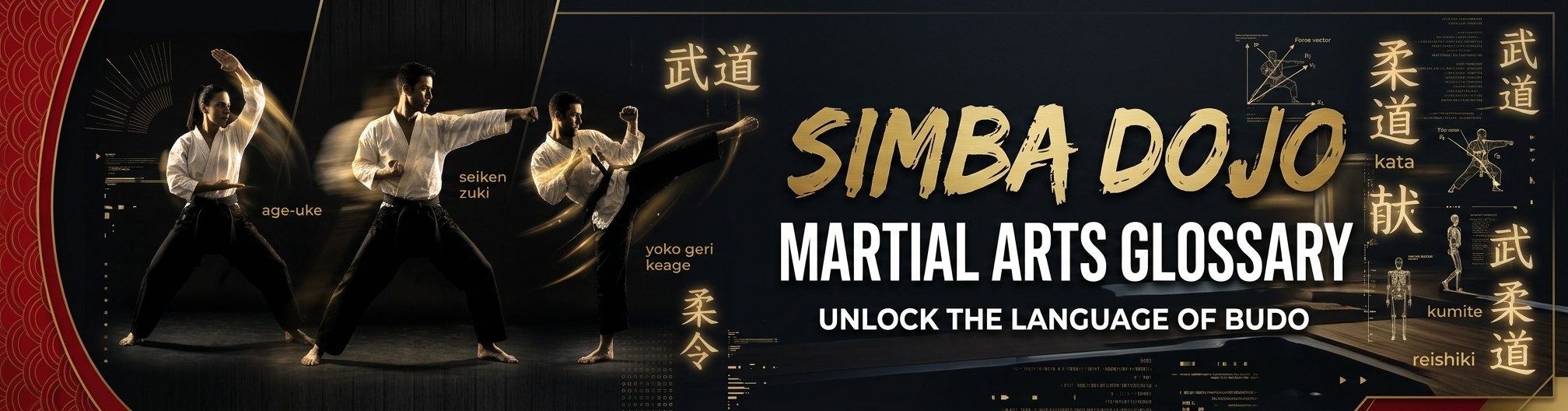
Mae is a fundamental directional and spatial term in traditional Japanese martial arts—most notably within Shotokan [[5]]—translating to "front," "forward," or "in front." It denotes techniques, stances, footwork, and tactical vectors directed straight [[4]] along the central line of engagement (seika tanden alignment), serving as the foundational directional prefix for iconic strikes, kicks, and evasive movements.
Etymology & Structural Breakdown
The term Mae consists of a single Japanese kanji character:
-
Kanji Representation: 前
-
Kun'yomi (Native Reading): Mae
-
On'yomi (Sino-Japanese Reading): Zen (as in Zenkutsu-dachi / 前屈立ち, "front stance")
Linguistically, 前 denotes spatial position ("in front of"), directional orientation ("forward"), or temporal progression ("before" or "ahead"). In compound martial terminology, when combined with native Japanese verbs or nouns, it retains the reading Mae (e.g., Mae-geri, Mae-ukemi); when combined in Sino-Japanese compounds, it adopts Zen (e.g., Zenpo - forward direction).
Key Characteristics & Components
-
Linear Directionality: Techniques designated with Mae travel directly along the frontal sagittal plane toward an opponent positioned on the center line.
-
Hips & Core Alignment: Direct forward execution requires driving the hips (koshi) straight ahead with square alignment (shomen) or dynamic forward snap to maximize linear velocity and kinetic energy.
-
Front-Facing Focus: Denotes spatial awareness (metsuke) directed forward toward the immediate opponent or primary threat vector.
Practical and Tactical Application in Shotokan Karate
In Shotokan Karate, Mae serves as a primary operational indicator across foundational technical categories:
-
Striking & Kicking (Mae-geri / Mae-tsuki):
-
Mae-Geri (Front Kick): Shotokan's fundamental kick, chambering the knee high before snapping (keage) or thrusting (kekomi) the ball of the foot (koshi) straight forward into an opponent's midsection or solar plexus.
-
Mae-Empi (Forward Elbow Strike): Driving the elbow point directly forward into an opponent's chest or chin.
-
Footwork & Movement (Mae-tobikomi / Zen-shin): Moving directly forward to collapse distance (ma-ai), breach the opponent's guard, or execute preemptive attacks (sen no sen).
-
Breakfalls & Safety (Mae-ukemi): Executing a forward roll or front fall to safely absorb impact force when thrown or tripped.
Key Variations & Mechanics
The concept of Mae manifests across multiple core martial applications:
-
Mae-Geri Keage (Front Snap Kick): Focuses on explosive upward/forward whip-like chambering and snapping of the knee and lower leg.
-
Mae-Geri Kekomi (Front Thrust Kick): Focuses on driving the heel/ball of the foot forward through deep hip extension and thrusting body weight into the target.
-
Mae-Ukemi (Forward Fall/Roll): Softening contact with the ground by slapping the forearms or rolling diagonally across the shoulder when moving forward.
-
Mae-Ukemi vs. Ushiro-Ukemi: Contrasting direct forward fall/roll mechanics against rearward fall mechanics (ushiro).
Budo & Cultural Significance
In traditional Budo and Japanese martial philosophy, Mae carries deep philosophical weight:
-
Forward Spirit (Mukai-mizu / Direct Mind): Moving Mae (forward) symbolizes courage, commitment, and facing confrontation directly without hesitation, backing away, or breaking mental focus (zanshin).
-
Direct Line Strategy (Chokusen): Shotokan Karate is renowned for its powerful linear entry style. Embracing Mae reinforces the principle that the shortest, most efficient path to neutralize a threat is a direct, forward-driven line.