| Kata |
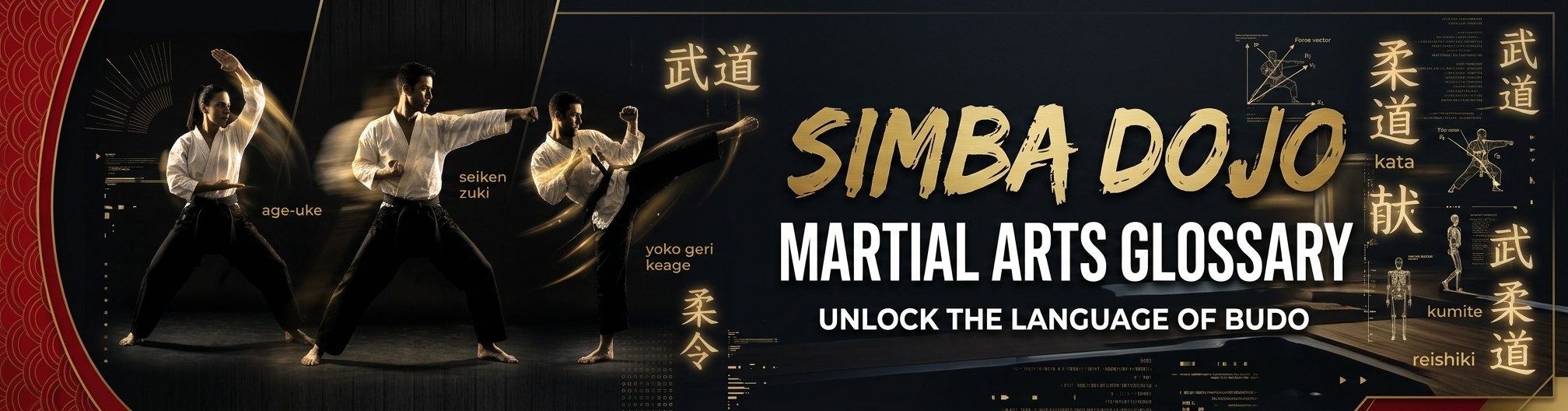
A Kata (型 / 形) is a structured sequence of pre-arranged martial arts movements that simulates defense and counter-attack scenarios against multiple imaginary opponents. Serving as one of the three foundational pillars of Karate—alongside basic techniques (kihon) and sparring (kumite)—kata acts as an encyclopedia of self-defense techniques, encapsulating stances, strikes, blocks, kicks, joint locks, sweeps, and strategic footwork within a formalized performance pattern (embusen).
Etymology & Structural Breakdown
The term is represented by two primary kanji characters in Japanese martial arts:
-
Kata (型): Composed of radicals meaning "model," "mold," or "pattern." This character emphasizes the formal, structured mold through which correct martial technique and discipline are shaped.
-
Kata (形): Composed of radicals meaning "shape," "form," or "appearance." This character focuses on the physical execution, dynamic posture, and external manifestation of the movements.
Both characters are pronounced kata and translate literally to "form," "pattern," or "mold."
Key Characteristics & Components
-
Embusen (Performance Line): Every kata follows a specific geometrical floor pattern along which the techniques must be executed, starting and ending at the exact same spatial point.
-
Kiai (Focused Vocalization): Specific movements within each kata require an explosive vocal projection (kiai) to unify breath, dynamic power (kime), and focus.
-
Rhythm & Tempo (Yoshi): Balancing rapid, explosive strikes with slow, deliberate breathing sequences or subtle transitional movements.
-
Zanshin (Unbroken Awareness): Maintaining continuous concentration, sharp visual focus, and combative alertness throughout the entire sequence.
Practical and Tactical Application in Shotokan Karate
In Shotokan Karate, kata forms the core technical library for practical combat application (bunkai):
-
Technique Preservation: Preserves historical Okinawa combat applications, translating movements into practical joint locks (kansetsu-waza), sweeps (ashi-barai), body evasions (tai-sabaki), and vital-point strikes (kyusho-waza).
-
Shotokan Kata Lineage: Progresses systematically from foundational forms (Heian Shodan through Heian Godan, Tekki Shodan) to advanced master forms (such as Bassai Dai, Kanku Dai, Jion, Hangetsu, Empi, Gankaku, and Unsu).
-
Kinetic Conditioning: Develops extreme leg strength, deep stance balance (Zenkutsu-dachi, Kiba-dachi, Kokutsu-dachi), dynamic hip rotation (koshino-kaiten), and power transmission.
Key Variations & Mechanics
-
Kihon Kata vs. Kaisho Kata: Fundamental kata focus on linear alignment, rigid stances, and basic blocking/striking, whereas advanced open-hand (kaisho) kata incorporate subtle joint manipulation, dynamic breathing changes, and intricate footwork transitions.
-
Biomechanical Mechanics: Requires proper sequencing of ground connection, core stabilization (tanden), relaxed muscle acceleration during transitions, and instantaneous total contraction (kime) upon completion of each strike or block.
Budo & Cultural Significance
In Budo culture, Kata is far more than a physical routine or competitive sport performance; it is a moving meditation and living preservation of martial lineage. Through decades of kata repetition (keiko), a practitioner polishes the mind, develops composure under stress (fudoshin), and embodies the classical principle of Shuhari—progressing from strict adherence to the form, to breaking free into functional application, and ultimately transcending form into natural, effortless expression.
Author - Sensei Miller
Hits - 8
Synonyms:
Form, pre-arranged pattern, formal routine, martial form, traditional pattern, combative sequence
|