The Center on Main™ in Verrado®
4239 N Village Street
Buckeye, AZ 85396

Monday and Friday
7:30 pm - 8:30 pm

The Center on Main™ in Verrado®
4239 N Village St
Buckeye, AZ 85396

Monday and Friday
7:30 pm - 8:30 pm

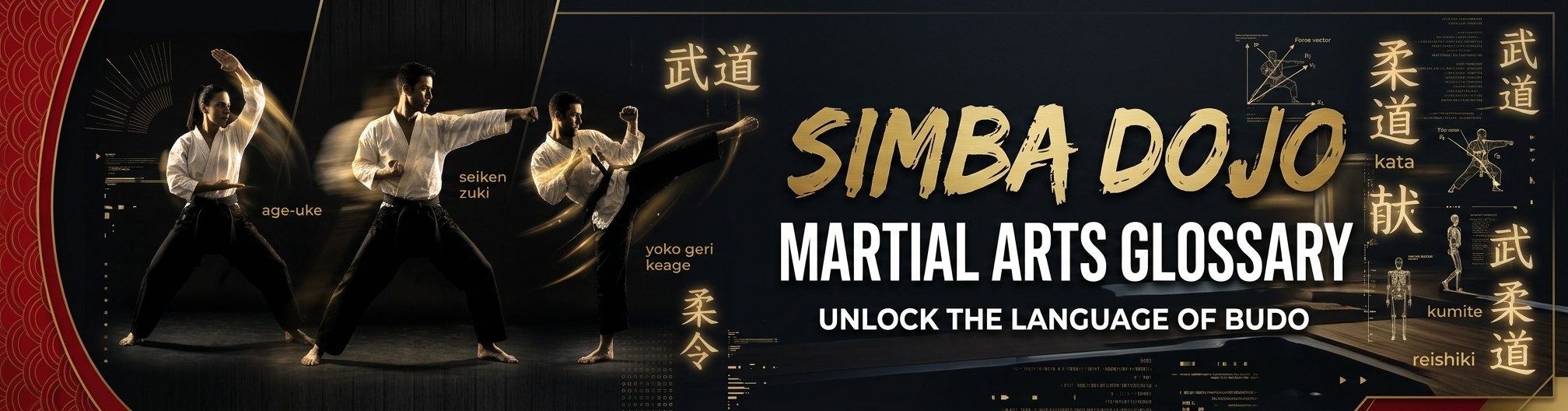
simba dojo glossary banner v2

hikite

Search for glossary terms (regular expression allowed)

Glossaries

Term Definition
hikite

Hikite (引き手)

Hikite, translated directly as the "pulling hand" or "retracting hand," is a foundational principle and mechanics concept in traditional Japanese martial arts, most notably Karate. It refers to the rapid, dynamic chambering of the non-striking or non-blocking hand back toward the hip or waist simultaneously as the active hand executes a technique.

Etymology & Structural Breakdown

  • Hiki (引き): Derived from the verb hiku (引く), meaning to pull, draw, retract, or tug back.

  • Te (手): Hand or arm.

Together, hikite literally translates to the "pulling hand."

  • Anatomical Positioning: In standard basic execution (kihon), the retracting hand is pulled back tightly along the ribcage, resting fists-up (supinated) just above the hip bone (seika tanden / belt level), with the elbow driven straight behind the body and squeezed tight toward the spine.

Key Characteristics & Components

  • Equal and Opposite Action (Newton's Third Law): Hikite utilizes rotational reaction force (reaction arm/hip engine). Pulling one arm back dynamically creates counter-torque in the shoulders and torso, driving increased acceleration, speed, and kinetic impact into the expanding arm (zuki or uke).

  • Core & Hip Engagement (Koshi no Kaiten): The retraction of the arm directly engages the lats, core musculature, and hip rotation, locking the upper torso to the lower abdominal center (tanden) at the instant of impact (kime).

  • Posture & Balance Maintenance: By balancing the forward momentum of a strike with an equal backward pull, hikite maintains the body's center of gravity and prevents the practitioner from leaning forward or losing balance.

Practical Application in Shotokan Karate

  • Kihon & Basic Technique: In basic line training, every straight punch (choku-zuki), front stance punch (oi-zuki), or rising block (age-uke) is paired with a sharp, full-range hikite to instil proper mechanical synchronization and muscle memory.

  • Grappling & Trapping in Self-Defense (Bunkai): While basic kihon visualizes hikite as simply chambering at the waist, its practical application (bunkai) in kata represents physically grabbing an opponent's arm, lapel, or hair and forcefully pulling them off-balance (kuzushi) directly into an incoming strike or strike/block combination.

  • Distraction & Control: In close-quarters applications, pulling an opponent’s limb down into one's hip disrupts their guard, exposes vulnerable targets (such as the ribs, temple, or neck), and eliminates their ability to counter-strike.

Budo & Cultural Significance

  • Dual Nature of Harmony (Yin and Yang / In-Yo): Hikite reflects the Taoist and Budo philosophy of dual forces working in harmony (In-Yo in Japanese). An offensive movement forward cannot achieve its full power without an equal, complementary pulling action backward.

  • Mindful Completion & Readiness (Zanshin): Retracting the non-active hand prevents a limb from dangling passively or becoming vulnerable to an opponent's trap, reinforcing a state of total body awareness and defensive readiness.

  • Refining Efficiency (Seiryoku Zenyo): Mastery of hikite allows a martial artist to generate devastating power using internal hip/torso rotation and biomechanical leverage rather than relying solely on raw shoulder or arm strength.

Author - Sensei Miller
Hits - 52
Synonyms: Pulling hand, Retracting hand, Chambering hand, Reaction arm
Ask a question
1000 characters left