The Center on Main™ in Verrado®
4239 N Village Street
Buckeye, AZ 85396

Monday and Friday
7:30 pm - 8:30 pm

The Center on Main™ in Verrado®
4239 N Village St
Buckeye, AZ 85396

Monday and Friday
7:30 pm - 8:30 pm

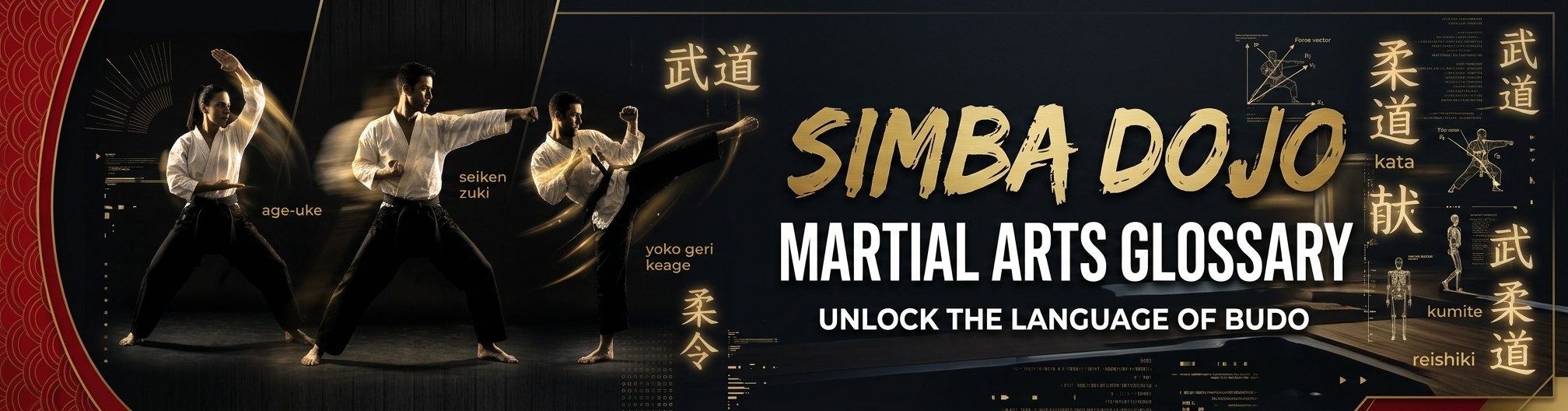
simba dojo glossary banner v2

Kaisetsu

Search for glossary terms (regular expression allowed)

Glossaries

Term Definition
Kaisetsu

Kaisetsu (解説)

Kaisetsu (解説) refers to the detailed explanation, commentary, analysis, or technical breakdown of martial arts techniques, forms, and principles. In Shotokan Karate, it encompasses the theoretical and conceptual exposition provided by an instructor (Sensei) to clarify the hidden intent, biomechanics, combat rationale, and application (bunkai) of kata movements or kihon drills.

Etymology & Structural Breakdown

The term consists of two Japanese kanji characters:

  • Kai (解): Untie, untangle, unravel, solve, analyze, or dissect.

  • Setsu (説): Explain, speak, advocate, theory, or view.

Together, Kaisetsu translates literally to "unraveling and explaining" or "analytical commentary."

Key Characteristics & Components

  • Theoretical Breakdown: Providing the verbal logic, history, and anatomical targets behind physical movements.

  • Bridge to Application: Connects abstract solo kata routines (form) directly to realistic combative usage (bunkai).

  • Biomechanical Analysis: Explains kinetic chain mechanics, hip rotation (koshino-kaiten), center-of-gravity management, and pressure points (kyusho).

  • Pedagogical Function: Acts as an instructional tool to deepen student comprehension beyond mere physical mimicry.

Practical and Tactical Application in Shotokan Karate

In Shotokan Karate instruction and practice, Kaisetsu plays a central role in elevating training from physical repetition to intellectual and combative understanding:

  • Kata Deconstruction: During kata study, after practicing solo movements, an instructor provides Kaisetsu to explain how a specific gesture (e.g., the opening movement of Heian Yondan) functions as a joint lock, sweep, or throat strike.

  • Correction of Kihon Mechanics: Applied during basic line drills to explain why specific angles, foot alignments, or hip tucks maximize power generation (kime) and body balance.

  • Tactical Contextualization: Details distance management (maai), reaction timing (sen), and rhythm adjustments necessary to make techniques effective against real opponents.

Key Variations & Mechanics

  • Kaisetsu vs. Bunkai: While Bunkai (分解) is the physical dismantling and partner demonstration of kata movements, Kaisetsu (解説) is the analytical explanation and commentary that accompanies that demonstration.

  • Omote vs. Ura Kaisetsu: Omote Kaisetsu provides the obvious, surface-level commentary (e.g., blocking a basic punch), whereas Ura Kaisetsu provides hidden or advanced analytical insights (e.g., joint locks, limb destruction, or grappling entries concealed within the same movement).

Budo & Cultural Significance

In Budo tradition, Kaisetsu embodies the intellectual side of martial study, reflecting the principle of Bunbu Ryodo (the dual path of the pen and the sword). It highlights that true martial mastery requires both physical capability and mental illumination. By seeking deep understanding (Kaisetsu), karateka preserve the genuine combative lineage of Okinawa and Japan, ensuring that kata does not degrade into superficial performance dance.

Author - Sensei Miller
Hits - 13
Synonyms: Explanation, commentary, analysis, technical breakdown, exposition, theoretical breakdown
Ask a question
1000 characters left