The Center on Main™ in Verrado®
4239 N Village Street
Buckeye, AZ 85396

Monday and Friday
7:30 pm - 8:30 pm

The Center on Main™ in Verrado®
4239 N Village St
Buckeye, AZ 85396

Monday and Friday
7:30 pm - 8:30 pm

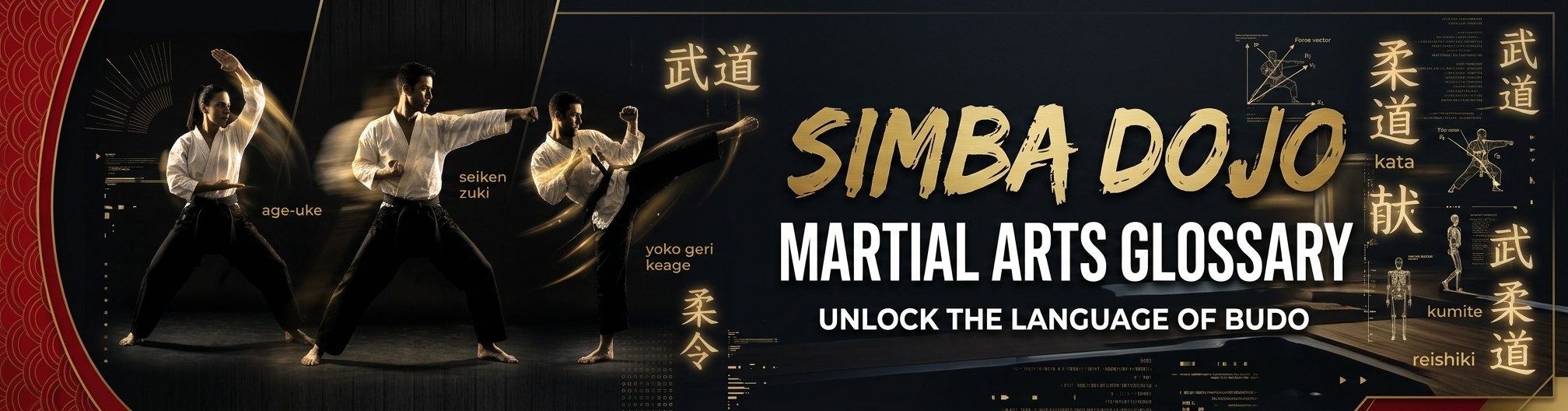
simba dojo glossary banner v2

Haishu-uchi

Search for glossary terms (regular expression allowed)

Glossaries

Term Definition
Haishu-uchi

Haishu-uchi (背手打ち)

Haishu-uchi (背手打ち) is an open-hand striking technique in Shotokan Karate that utilizes the back surface of the hand (haishu) as the primary striking area. Executed with a whipping or snapping motion driven by forearm rotation and hip engagement, it targets soft or vulnerable areas of an opponent's body such as the temple, jaw, neck, solar plexus, or ribs.

Etymology & Structural Breakdown

The term consists of three Japanese components:

  • Hai (背): Back, rear, or dorsal surface.

  • Shu / Te (手): Hand.

  • Uchi (打ち): Strike, hit, or snap (derived from the verb uchiru / utsu, to strike).

Together, Haishu-uchi translates literally to "back-hand strike" or "dorsal hand strike."

Key Characteristics & Components

  • Striking Surface (Haishu): The contact area is the flat dorsal surface of the open hand, stretching across the back of the metacarpal bones.

  • Hand & Finger Position: The fingers are held tightly together, slightly flexed at the joints, with the thumb pressed securely against the side of the palm to prevent joint injury upon impact.

  • Snap & Whip Mechanics: The technique relies on a rapid whipping motion of the wrist and elbow rather than rigid linear pushing.

  • Hip Expansion & Rotation: Power is generated through active expansion or rotation of the hips (koshino-kaiten) coupled with precise contraction (kime) at impact.

Practical and Tactical Application in Shotokan Karate

In Shotokan Karate practice and application (bunkai), Haishu-uchi is applied in both offensive counter-attacks and defensive maneuvers:

  • Close-Range Counter-Striking: Particularly effective at close quarters where full-range linear punches (oi-zuki, gyaku-zuki) lack sufficient space to accelerate.

  • Kata Integration: Displayed prominently in advanced Shotokan kata such as Gankaku, Tekki Nidan, Tekki Sandan, and Gojushiho Sho, where it often follows a deflection or trap of an incoming strike.

  • Simultaneous Deflection & Strike: Functions effectively in clearing an opponent's guard while delivering a fluid, circular strike to the throat, jaw, or temple.

Key Variations & Mechanics

  • Jodan Haishu-uchi: High-level back-hand strike targeting the face, temple, or neck.

  • Chudan Haishu-uchi: Mid-level back-hand strike directed at the solar plexus or floating ribs.

  • Mawashi Haishu-uchi: A circular or arc-like variation sweeping inward or outward around an opponent's defense.

  • Wrist Snap & Forearm Rotation: Requires initial relaxation of the shoulder and forearm during acceleration, followed by an instantaneous wrist lock and muscular focus (kime) at the precise instant of impact.

Budo & Cultural Significance

In the philosophy of Budo, Haishu-uchi demonstrates the versatility and fluidity of open-hand techniques (kaisho). It reflects the classical principle that effective self-defense does not rely solely on clenched-fist brute force, but on adaptable, whip-like speed and structural precision. Practicing kaisho strikes fosters body control, refined trajectory, and deep spatial awareness without sacrificing power.

Author - Sensei Miller
Hits - 13
Synonyms: Back-hand strike, dorsal hand strike, back of hand strike, open-hand back strike
Ask a question
1000 characters left