The Center on Main™ in Verrado®
4239 N Village Street
Buckeye, AZ 85396

Monday and Friday
7:30 pm - 8:30 pm

The Center on Main™ in Verrado®
4239 N Village St
Buckeye, AZ 85396

Monday and Friday
7:30 pm - 8:30 pm

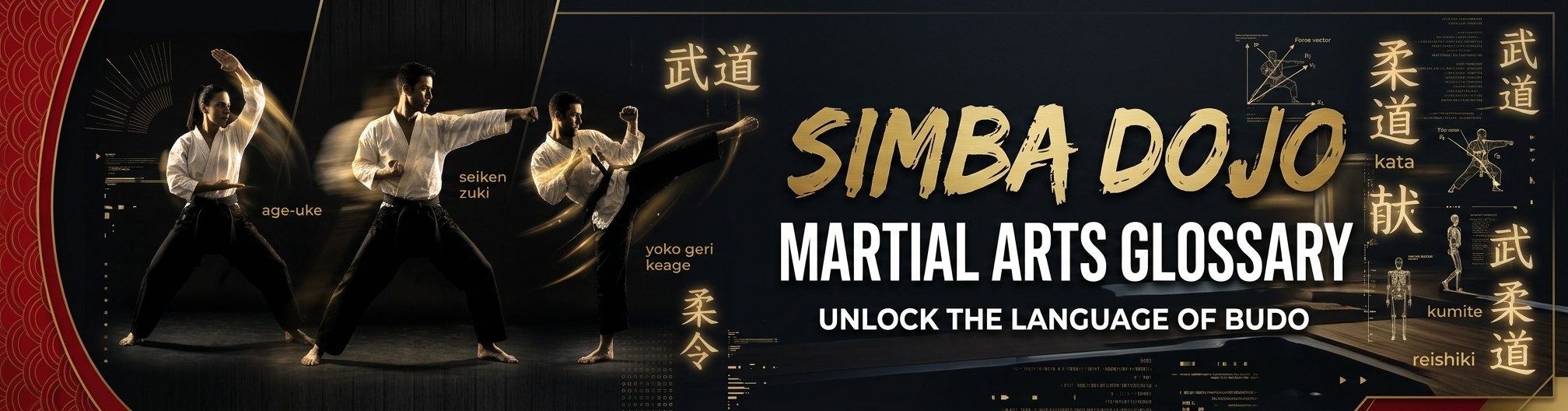
simba dojo glossary banner v2

Onegai-shimasu

Search for glossary terms (regular expression allowed)

Glossaries

Term Definition
Onegai-shimasu

Onegai-shimasu (お願いします)

Onegai-shimasu is a fundamental Japanese polite phrase and martial arts greeting translated roughly as "please," "please teach me," "please train with me," or "I humbly request your favor." In traditional dojo etiquette, it is spoken with a bow (rei) at the beginning of a class, training exercise, or formal match to express gratitude, humility, and a mutual commitment to train safely and respectfully.

Etymology & Structural Breakdown

The phrase is constructed from several linguistic components in Japanese etiquette and polite language (Keigo):

  • O (お / 御): An honorific prefix added to nouns and verbs to demonstrate respect toward the listener.

  • Negai (願い): Derived from the verb negau (願う), meaning "to wish," "to desire," "to request," or "to pray."

  • Shimasu (します): The polite form of the auxiliary verb suru (する), meaning "to do."

Combined, Onegai-shimasu literally means "I make a respectful request" or "I humbly ask for your favor/guidance."

Key Characteristics & Components

  • Polite Formal Greeting: It serves as a respectful prelude to an interaction, signaling readiness and willingness to cooperate.

  • Accompanied by a Bow (Rei): The spoken phrase is paired with either a standing bow (ritsurei) or a seated bow (zarei), establishing appropriate dojo decorum (Reishiki).

  • Mutual Exchange: It is stated both by the student to the instructor (or senior rank) and mutually between training partners (keikogi) before engaging in drills or sparring.

Practical and Tactical Application in Shotokan Karate

In Shotokan Karate, Onegai-shimasu plays a functional role in establishing psychological focus and setting boundaries for physical practice:

  • Opening of Class (Dojo Etiquette): Spoken collectively by students toward the Sensei or Senpai during the opening bowing ceremony (Seiza / Shomen-ni-rei / Sensei-ni-rei), establishing mindsets focused on learning and respect.

  • Partner Kumite & Pair Drills: Stated prior to beginning any partner drill—such as Gohon Kumite (five-step sparring), Ippon Kumite (one-step sparring), or Jiyu Kumite (free sparring)—to acknowledge trust and agree to control attacks to protect one another from injury.

  • Kata & Examination (Shinto/Shinsa): Spoken when stepping onto the mat before testing panels or examiners to signal readiness to perform.

Key Variations & Mechanics

  • Yoroshiku Onegai-shimasu (よろしくお願いします): A more formal, complete version often used in business or official meetings, meaning "Please look favorably upon me" or "I am in your care."

  • Yoroshiku Onegai-shii-masu (Formal Dojo Recitation): Often elongated slightly during synchronized group bowing in traditional karate dojos.

  • Onegai-shimashita (お願いしました): The past-tense form, occasionally used after a task or session is finished, though Arigatou gozaimashita ("Thank you very much") is standard at the close of martial arts training.

Budo & Cultural Significance

In Budo (the martial way), training cannot exist without partners, teachers, and an environment of safety. Onegai-shimasu embodies the cornerstone principle popularized by Shotokan founder Gichin Funakoshi: "Karate begins and ends with respect" (Karate-do wa rei ni hajimari, rei ni owaru). Stating Onegai-shimasu strips away ego, fosters humility (Hanshi), and acknowledges that martial progress relies on mutual trust, shared growth, and respect between practitioners.

Author - Sensei Miller
Hits - 19
Synonyms: Please teach me, please train with me, I humbly request your guidance, please help me, yoroshiku onegai shimasu.
Ask a question
1000 characters left